WE ARE CEPA CERTIFIED
The European Confederation of Pest Management Associations has verified that we meet the requirements and competencies for providing pest management services.
We eliminate pigeons with a biodegradable and safe treatment.

We care about the health of people and pets.

OUR METHOD FOR PIGEON CONTROL

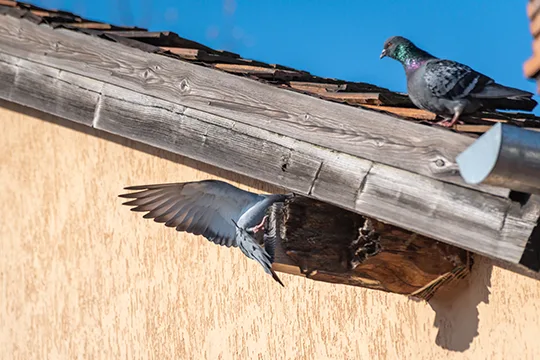
Pigeon infestation analysis

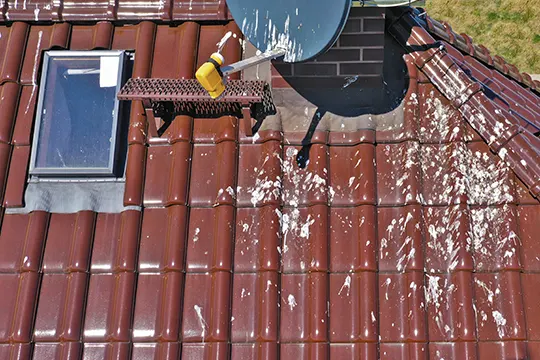
Site sanitation for pigeon infestation

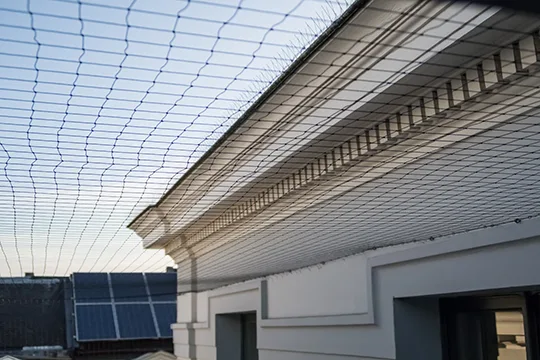
Habitat modification to reduce pigeon populations

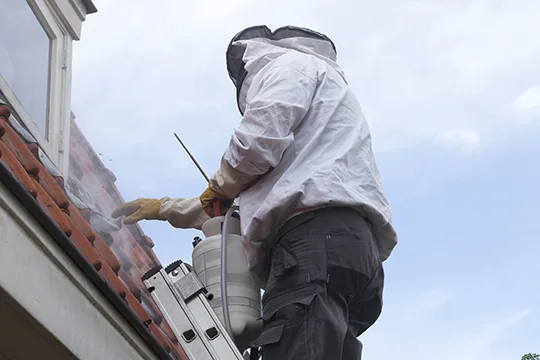
Use of pigeon repellents
CONTACT US WITH NO OBLIGATION
Fill out the form, and we will contact you as soon as possible.
"*" indicates required fields
Basic information on data protection
Data Controller: AMERICAN PEST CONTROL COMPANY, S.A. | A28366490 | C/ Granizo, 3, PI San José Valderas II, 28918, Leganés, (Madrid), Spain | +34 916 429 060 | info@americanpest.com
Purposes: To manage the potential commercial or professional relationship.
To deal with your enquiries and send you the information you request.
Rights: You may exercise the rights granted under Articles 15 to 22 of the GDPR — access, rectification, erasure, portability, restriction and objection, as well as the right not to be subject to decisions based solely on the automated processing of your data — where applicable, by writing to C/ Granizo, 3, PI San José Valderas II, 28918, Leganés, (Madrid), Spain, or by email to info@americanpest.com.
Additional information: You can consult additional and detailed information on our Privacy Policy here.

EXTENSIVE KNOWLEDGE IN PIGEON REMOVAL
Why is it necessary to control the pigeon population?
The urban pigeon (Columba livia domestica), considered by a large part of the population to be a beneficial animal, is, however, currently the most dangerous bird pest for humans.
They are found in cities and rural areas. In cities, they can be seen in parks and squares where many people enjoy watching and feeding them; they use bridges, buildings, statues, etc., as perching, resting, and nesting areas. In rural areas, they inhabit farmyards, stables, barns, towers, etc. In general, pigeons are animals that tend to feed, nest, and rest routinely in the same places, in sites located in high and protected areas.
On the one hand, pigeons cause a nuisance because they deposit their droppings on buildings, benches, statues, and vehicles. This is not only unpleasant to the eye and nose, but it also causes permanent stains or premature corrosion and oxidation of surfaces. Some metal structures and other objects. Furthermore, their nests can obstruct downspouts.
From a health perspective, pigeons can carry pathogens and transmit diseases such as histoplasmosis, ornithosis, salmonellosis, and cryptococcosis. They are also hosts to various ectoparasites: Cimex columbarius (pigeon nest bug), Argas relexus (pigeon tick), Pseudolynchia canariensis (pigeon fly), etc.
What are the 5 strategies for pigeon control?
1. Inspection and diagnosis of the pigeon situation
Before implementing any measures, it is essential to identify the pigeons' roosting, nesting, and feeding sites. It is necessary to know the population level and their range, and it is important to determine if modifying environmental and structural factors can help eliminate or reduce the pigeon population.
2. Sanitation
Sanitation measures aimed at eliminating food scraps and water sources significantly influence pigeon control and, in some cases, can even solve the problem on their own.
For example, pigeons are often found around outdoor restaurants, fast-food restaurants, and other food establishments. Removing food scraps is the most effective way to keep these birds away.
Pigeons need to drink water daily; therefore, it will be necessary to eliminate any water source (e.g., puddles, clogged gutters, etc.) or make it unsuitable for pigeons without altering the ecological environment.
3. Modifying Pigeon Habitats
The most effective method for keeping pigeons away from buildings, monuments, etc., is to prevent their access to or use of the structure as a nesting, perching, or resting place. Access to building entrances should be covered with plastic netting, whose weight and resistance make it ideal for birds. Modifying the angle of ledges to 45° or greater is a way to discourage perching on ledges or overhangs.
4. Pigeon Repellents
Repellents are designed to affect one or more of the birds' senses, thus making them uncomfortable while resting and perching, and causing them to leave the area. There are four types of repellents:
– Tactile repellents: These repellents can be mechanical (barbed wire, rows of taut steel wire, electrified fences, and water jets) or chemical (gels, pastes, etc.).
– Visual repellents: These include the use of flashing lights, fake owls, hawks, snakes, balloons, etc.; they are not very effective against pigeons in urban and industrial environments, as most birds become accustomed to the object and ignore it.
– Auditory repellents: These encompass loud noises such as alarms, gunshots, recordings of birds emitting amplified alarm calls, etc. These repellents are not very effective against pigeons, as these birds are well adapted to everyday noises in urban areas.
– Olfactory repellents: Naphthalene vapor has been used as a bird repellent; For naphthalene to be effective, it must be used in high doses. Due to its irritating properties, its use is not recommended in buildings occupied by people.
5. Pigeon Population Reduction
In some countries, such as the USA, certain chemical substances toxic to birds, called avicides, are authorized. The most widely used is 4-aminopyridine, marketed under the name Avitrol. Avitrol is used as a toxic bait in pigeon baiting programs.
To carry out a baiting program, the daily movement patterns of the pigeons between roosting, resting, and feeding areas must be established in order to then select appropriate baiting locations. Once both the baiting points and their number have been established, pre-baiting should be carried out: this conditions the pigeons to eat in the location that, while acceptable to them, is optimal for the program's effectiveness. Because pigeons are very wary, pre-baiting and toxic baiting must be applied at the same time of day and in the same manner.
When a good baiting program is implemented, a 65% to 85% reduction in the pigeon colony can be achieved. Complementary programs must be used for complete eradication. Chemosterilants are also used as a baiting control method. Female pigeons fed these products for 10 days are infertile for 6 months. In Spain, the only substance authorized for bird control is anthraquinone, which is used more as a repellent than as a toxic bait. In some situations, pigeons can be effectively controlled by trapping. The most suitable places to set these traps are the pigeons' roosting sites.
The success of trapping can be enhanced by using pre-baited traps beforehand. For pre-baiting to work, baits such as corn or millet are placed around and outside the traps; after 3 or 4 days, the baits are placed inside the traps. To prevent the birds from becoming wary of the trap, 4 or 5 pigeons should always be left inside the cage as decoys to attract the rest.
What does the inspection and diagnosis of pigeon health involve?
Physical characteristics
Typically, they have a gray body with a whitish rump.
Reproduction and development
– The female lays two eggs in a poorly constructed nest.
– Incubation: 17 days from the laying of the second egg.
– The young reach sexual maturity at five months.
– They reproduce year-round except during periods of intense cold.
– Lifespan: 20 years.
Pigeon habits
– The pair mates until death.
– The young can fly at four weeks old.
– They feed on seeds and food scraps.
– They nest anywhere with a solid surface.
How does sanitation help control pigeons?
– They are vectors of paratyphoid fever, ornithosis, and other diseases.
– They are hosts to parasites such as ticks, mites, bedbugs, lice, etc.
– Their droppings soil building facades and statues, and clog gutters.
– They produce annoying noises.
How can pigeon habitats be modified?
- Maintain proper hygiene
- Prevent them from nesting
- Shoot them when permitted
What types of pigeon repellents are available?
To combat pigeon infestations, several methods can be used:
- Sound deterrents:
These prevent certain birds from approaching, reproducing the cries of birds of prey or distress calls. With this system, it's advisable to change the order and frequency of the recordings so the birds don't become accustomed to them. These sounds are used in open spaces and can cover up to 6,000 square meters. Visual deterrents that simulate human or predator silhouettes can be used as a complement. - Electronic eradicators using complex waves:
These affect the birds' nervous system, causing irritability, aggression, and loss of appetite, disrupting their regular sleep cycle, and disorienting them. This system is used in covered areas, and the birds generally leave the area within 60 days. - Netting systems:
These prevent pigeons and other birds from entering buildings. They also prevent perching and nesting. They are very resistant and almost invisible from a distance. They are most useful on the upper parts of buildings. - Wire or spike systems:
These prevent birds from perching on cornices, chimneys, gutters, or other protruding parts of buildings. They consist of a sturdy base to which stainless steel wires are attached, their length creating an unstable surface for birds to perch on. Installation is simple. - Repellent gels:
This method is effective for up to a year. It is mainly used to protect monuments of historical value because it does not corrode or leave grease. The substance used is sticky and stains wings and legs, causing discomfort to the birds and reducing their mobility and escape potential. It can be applied to a multitude of surfaces as long as they are clean. - Traps or cages:
This method is widely used at the municipal level, although it is not effective as long as pigeons continue to find shelter and food in the area. These traps typically consist of cages placed in quiet locations, away from people, with some food inside. The cages are left open until the pigeons gain confidence. After about 10 days, the cage is manipulated so the pigeons can enter but not escape. Once captured, the pigeons are kept for a few days, with ample food, to attract other birds. Finally, the pigeons are released far from the capture site, but there is a high probability they will return. This method is quite expensive due to its low effectiveness and high labor costs.
There are other, less popular methods, such as controlled culling, which requires permits, or the use of poisons. Poisons can be ingested by other birds or pets, making it a painful and unethical method.
However, bird populations can be controlled with more natural methods,such as creating artificial dovecotes that are easy for humans to access, clean, and maintain. This method can reduce the number of eggs laid and deworm the pigeons. However, it's not a very effective system, as they quickly start laying more eggs.
At American Pest Control, we recommend falconry as a method for controlling bird pests. Birds of prey prevent pigeons from approaching certain areas simply by being present. Controlled flights of trained falcons and kestrels are carried out, targeting only pigeons. With this system, the timing and timing of the flights must be varied, with interventions taking place on random days. This method is used at airfields and airports, and because it's a natural method, it's gaining popularity. It's important to remember that birds of prey are their natural predators.



Qualified technicians

Civil liability insurance